
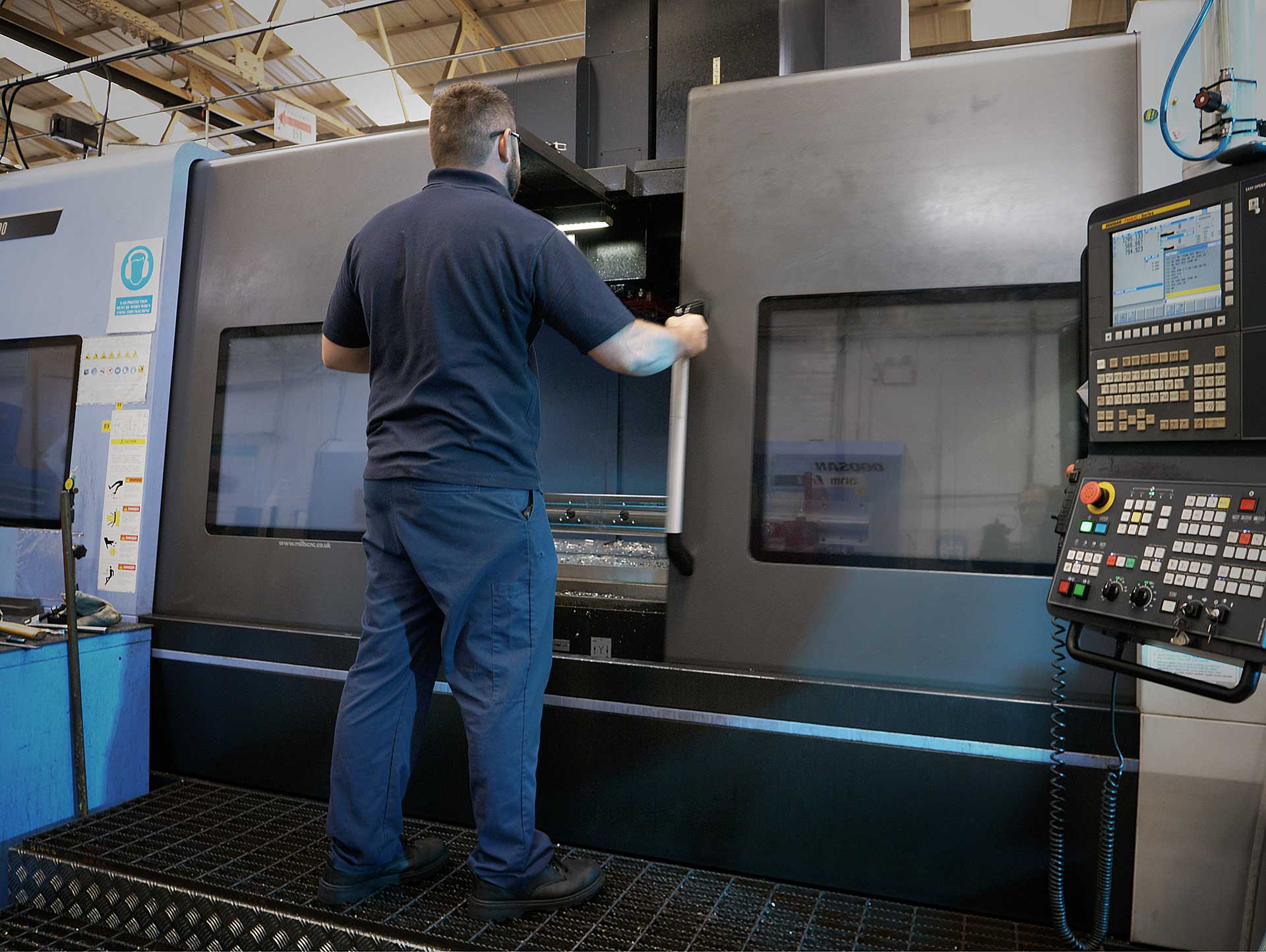
When it comes to production failure, it’s often easier for manufacturers to find problems with tooling and machining than with workholding. Largely because they are the visible elements, making a direct impact on the cut. A blunted edge or a machine error code is a more visual clue to act upon than a ‘hidden’ workholding issue like a slightly loose clamp or a vibration.
But, reacting to tooling and machining is a case of trying to treat the symptoms of a problem, and not the cause. Some relatively small changes to fixturing can bring about considerable improvements, circumventing issues arising from poor rigidity, clamping pressure or surface finishing issues caused by a part slipping or vibrating slightly.
It’s important to integrate workholding at the design stage
The ultimate aim should be to ensure that workholding is proactively integrated into how a work piece is secured in the initial manufacturing planning stages. Trying to find better ways to hold a part after it is designed can often lead to longer set up times, higher volume scrap and poor access.
A proactive approach is an important shift in manufacturing
When designed and set up properly, workholding devices will allow a machine to work at optimum efficiency and productivity, directly affecting:
- Accuracy and precision.
- Tool life.
- Efficiency: Reduces machine down time and allows unmanned operation.
- Cost: An efficient hold will reduce set up time, changeover time and reduce complex, customized, last-minute fixtures.
- Cutting tool access: Good design allows a clear access path.
- Overall operator confidence
Understanding the principles of workholding is essential for engineers
Positioning a workpiece securely and accurately during machining guarantees precision. It is at the heart of optimal efficiency, and the manufacture of design parts at scale.
#WorkholdingDesign #IntegratedWorkholding #DesignforManufacturing #EffectiveMachining
